


GreenHouse
Year
2020
Location
Wapserveen
Client
Stichting de nieuwe wereld
For a community housing project in Drenthe, Superuse on Site designed and developed a living unit called GreenHouse.
GreenHouse is a flexible house for two families that can easily be transformed into a home for four families in the future. It serves as a model project that minimises energy use for heating and ventilation, built with as little impact as possible during construction and once in use.
Project team approach strengthens community and local economy.
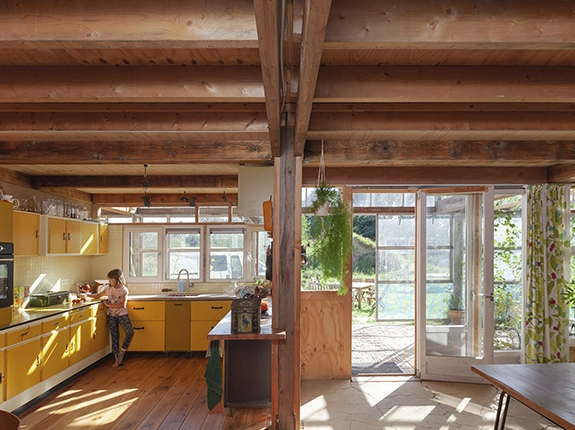
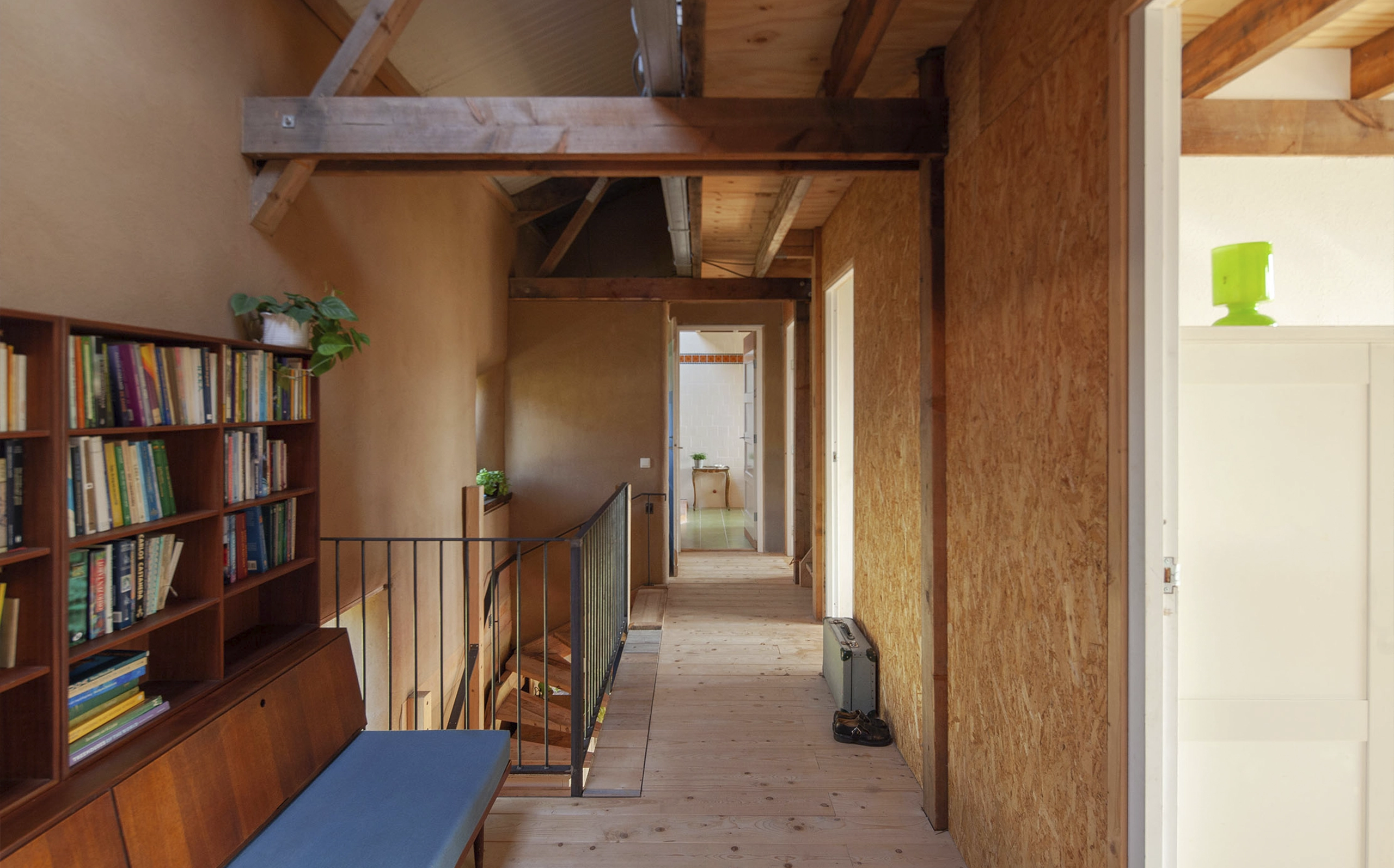
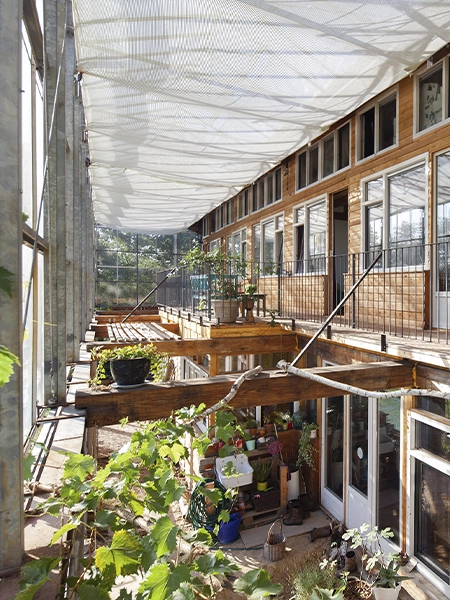
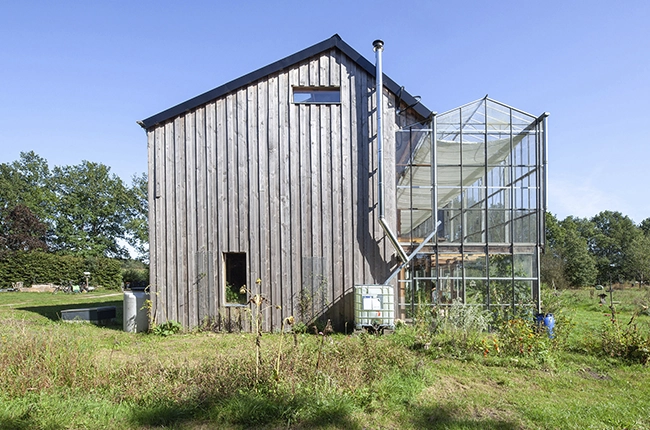
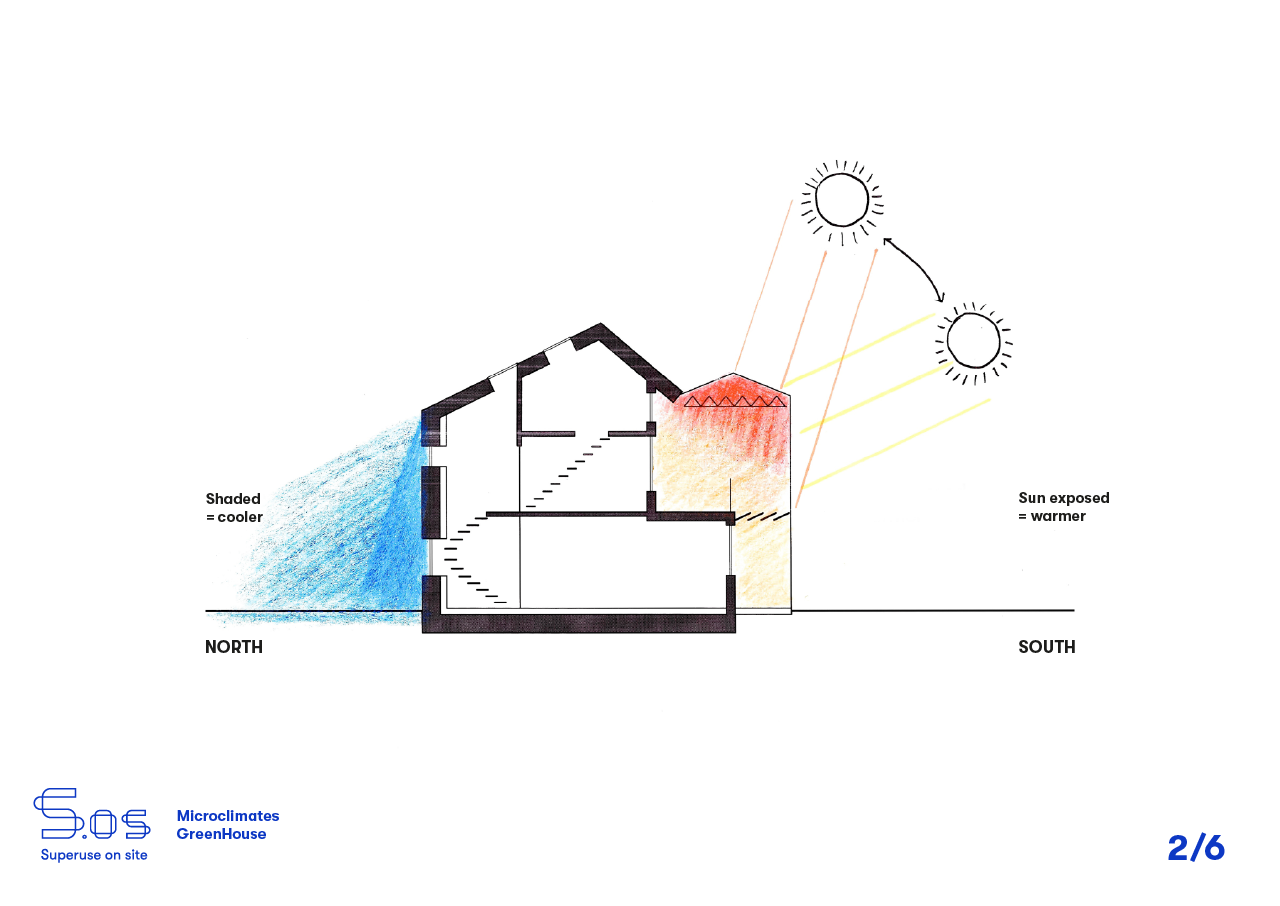
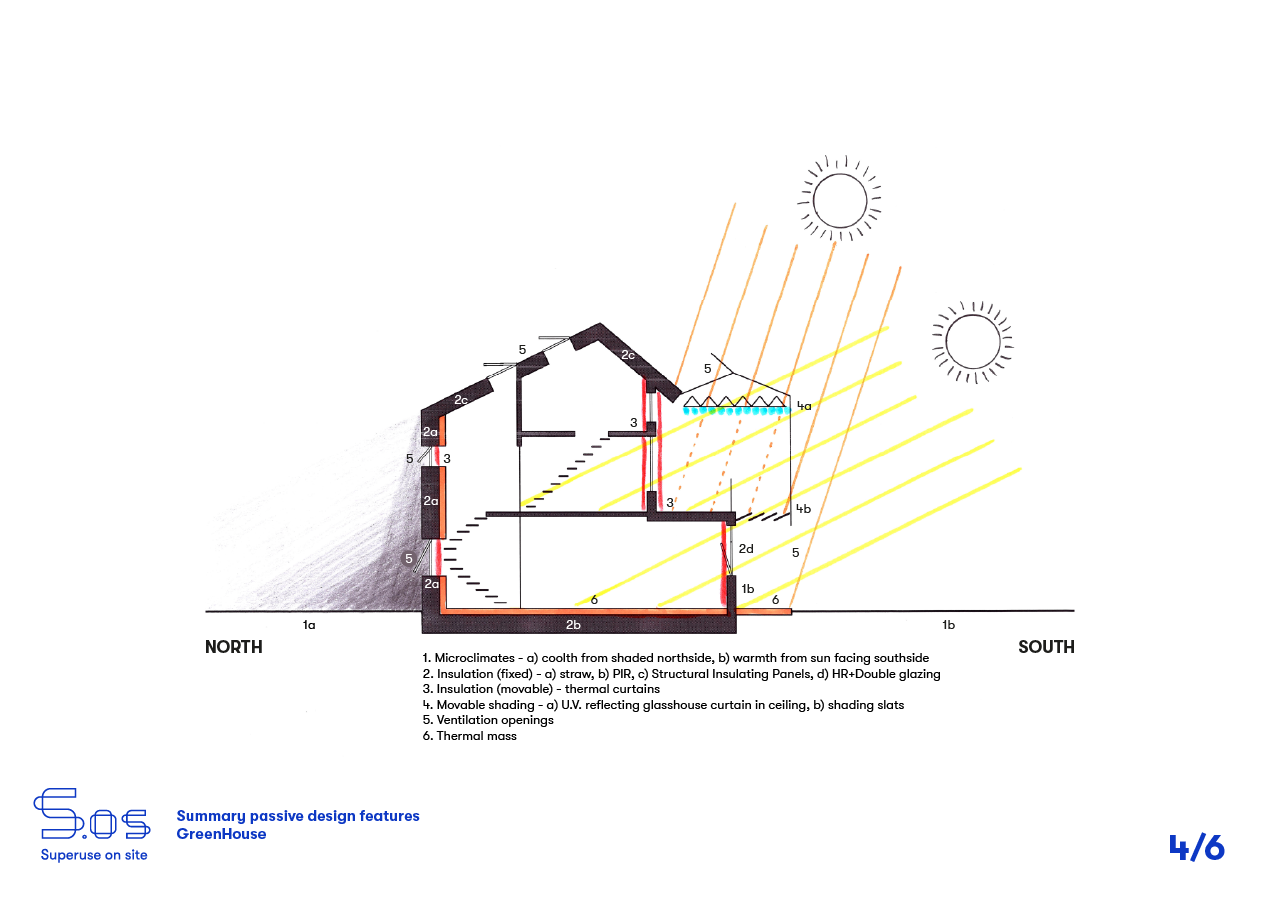
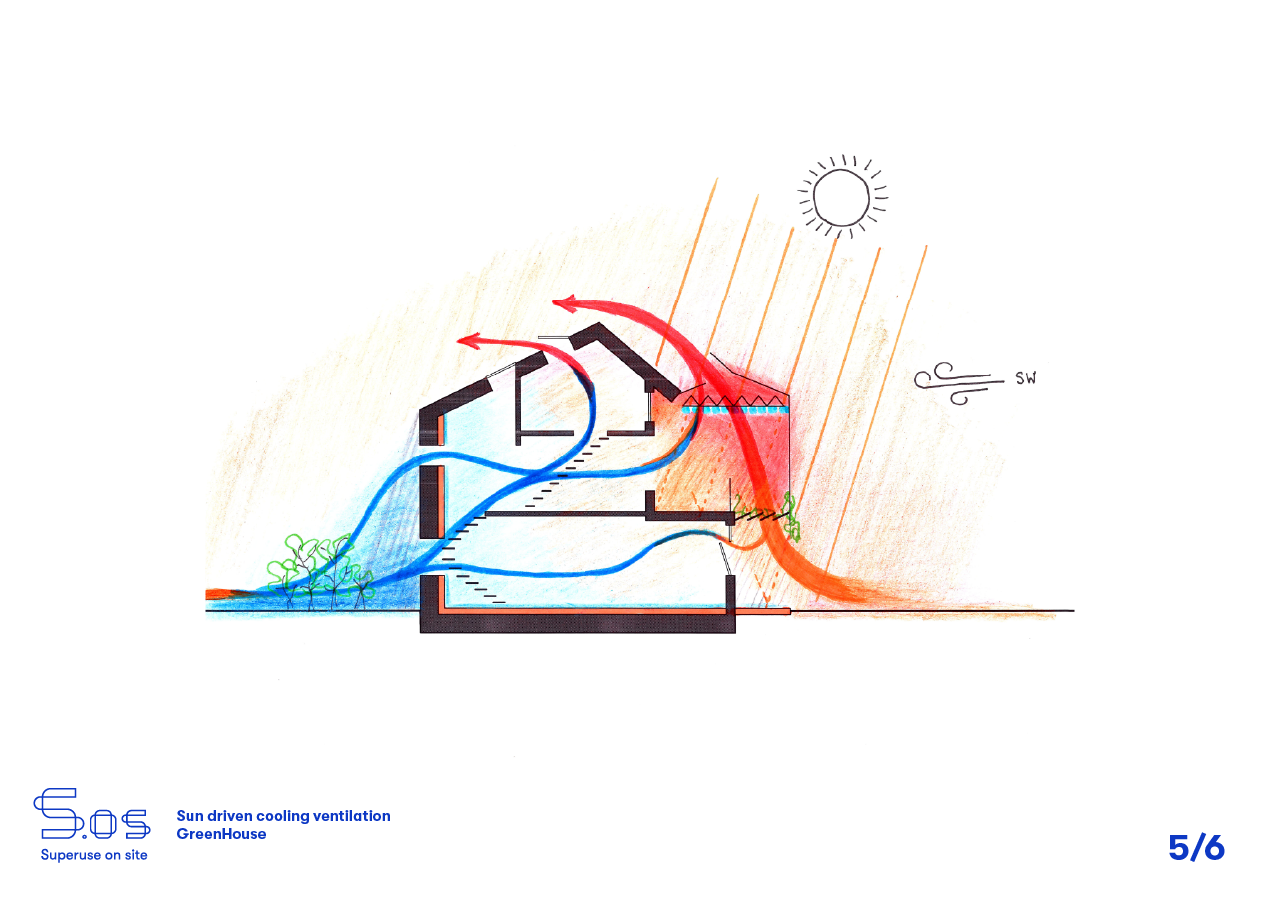
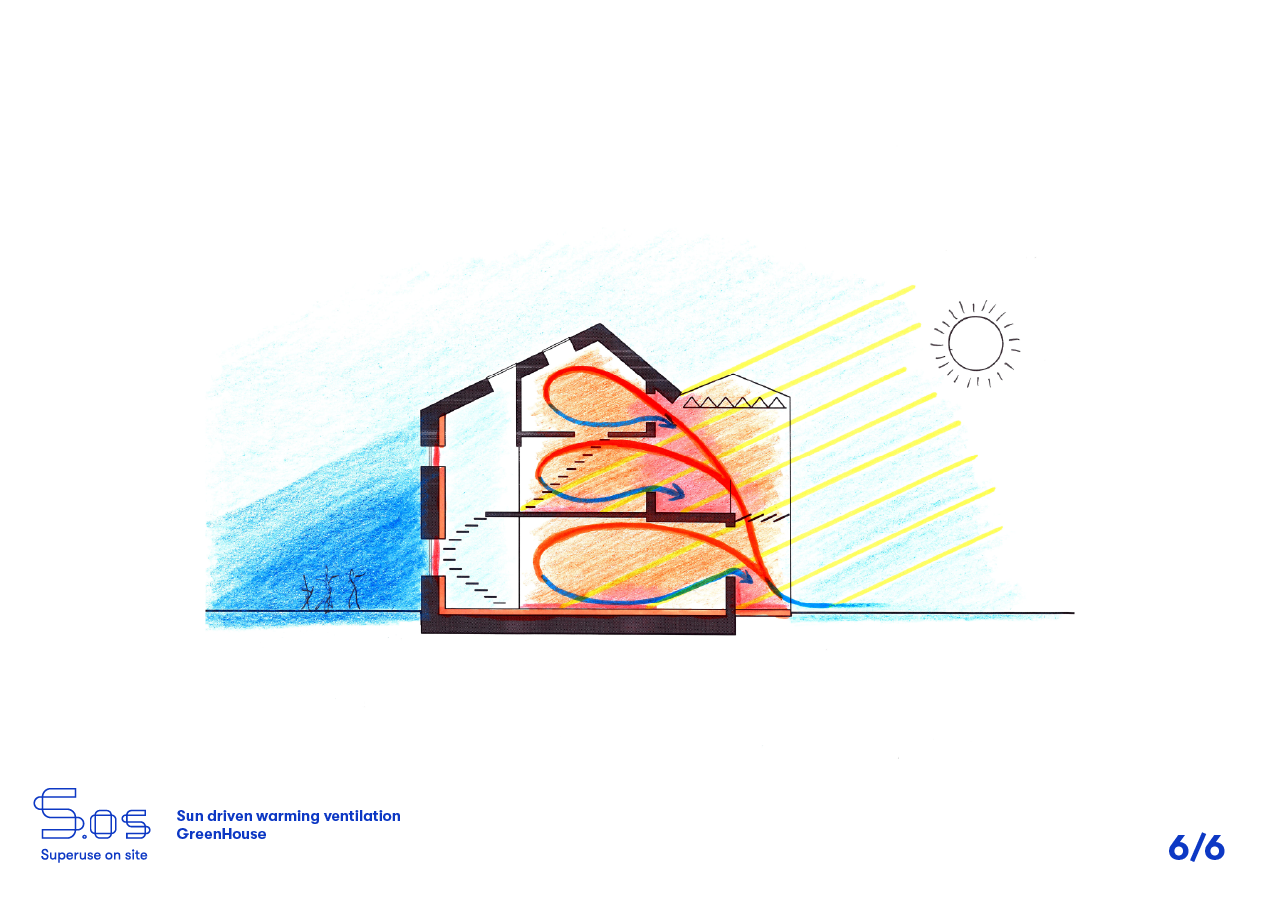
GreenHouse merges the classic look of a wooden barn and the typical structure of Dutch greenhouses. The materialisation is circular, bio-based, remountable and local. The wooden skeleton offers flexibility for self-build, layout variations and reuse. The greenhouse is reinforced with standard greenhouse material to comply with the building code and acts as a climate machine for sun-driven ventilation, warming and cooling.
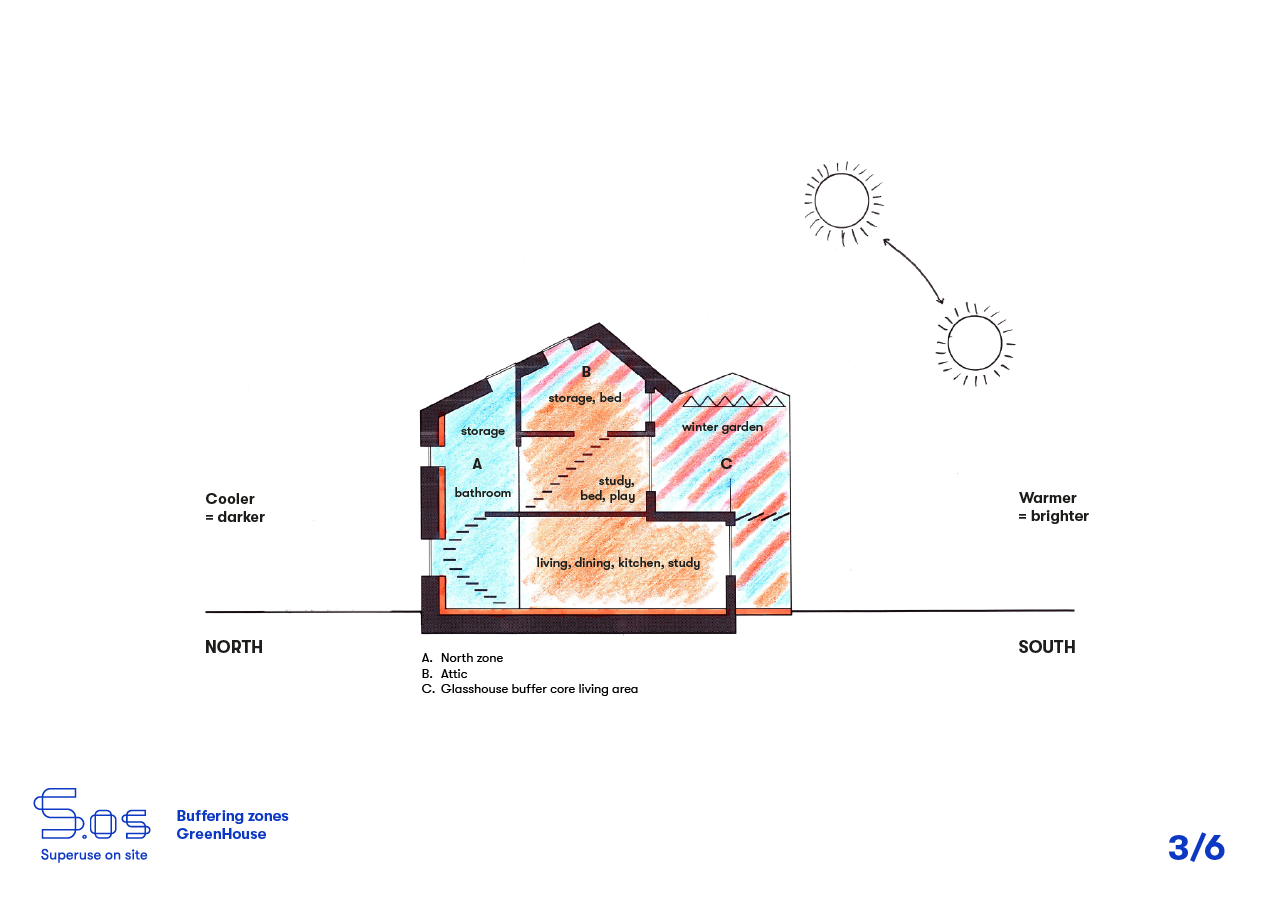
Functions needing more daylight and warmth (living, eating, cooking etc.) are zoned towards the natural daylight and warmer southern side. Functions needing less light and warmth (storage, stairs, bedrooms etc.) are zoned toward the darker and cooler northern side and attic.
Insulation, zoning and buffering reduce the need for heating, cooling and artificial light.
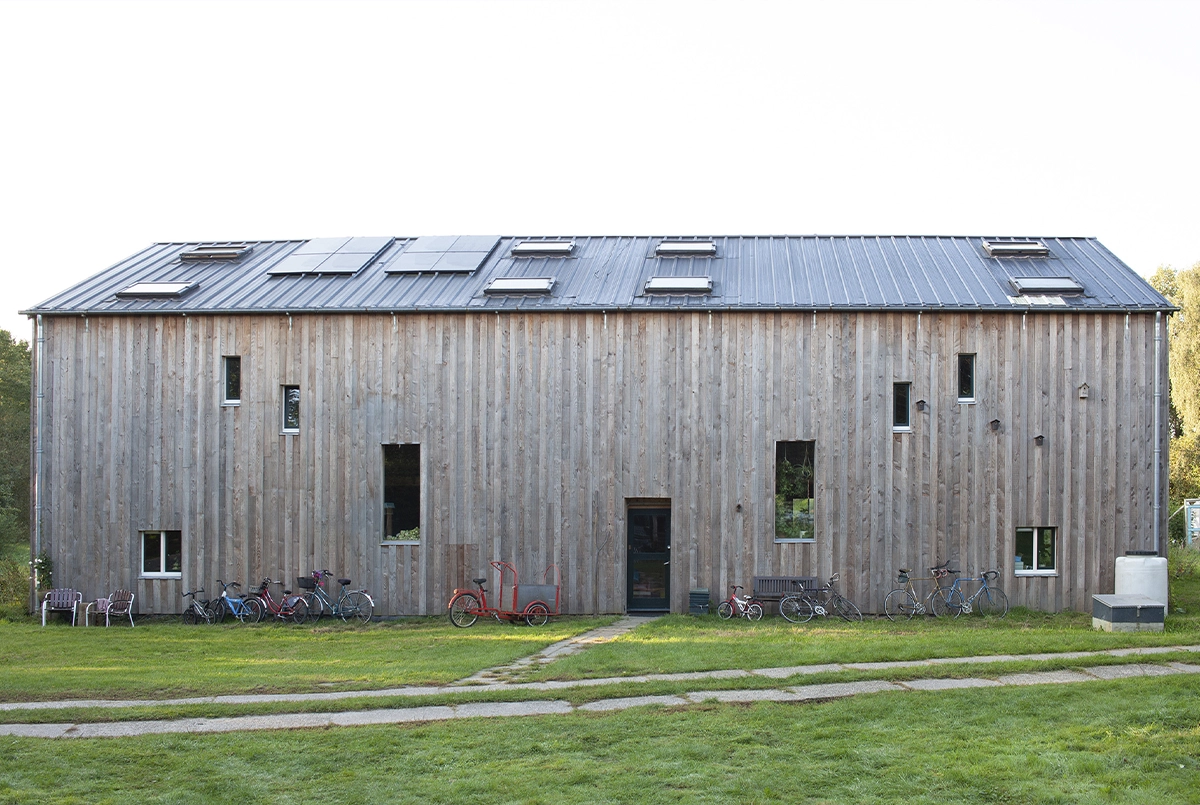
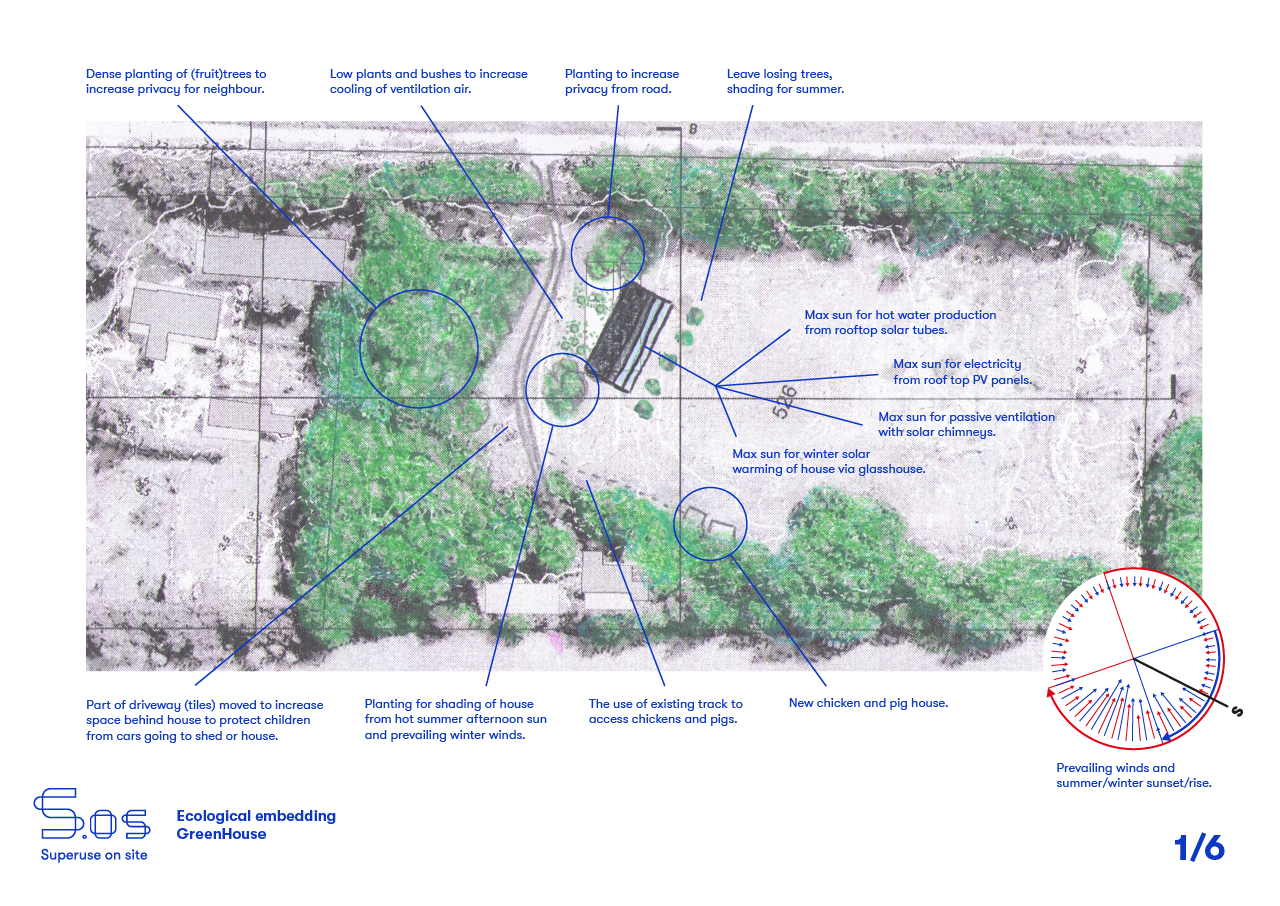
The house forms a barrier between the southern private yard with the vegetable garden and the rear where parking, firewood storage and recycling are organised. Because of this position, the house warms itself with the low winter sun. Vegetation on the north facade enhances privacy and cooling ventilation, and a row of trees on the south will provide more shade in summer.
The house is designed and built to be adaptable and last for many generations. After completion, the designers and consultants remain involved to further optimise the building.
System diagrams
Colophon
Architect: Superuse on Site (Césare Peeren, Mel Feldmuller) and FFarch (Frank Feder)
Sustainability consultants: SUS ateliers (Arjan Karssenberg, Dominique Tegelbeckers)
EPC/ventilation/daylight calculations: Remy Middelburg (SUS ateliers)
Straw construction: Strobouw Nederland, Strobouwer (Wouter Klijn)
Contractor: Stichting de nieuwe wereld
Construction: Nico Plukkel
Pictures: Denis Guzzo